AcWing 848. 有向图的拓扑序列
题目
给定一个 个点 条边的有向图,点的编号是 到 ,图中可能存在重边和自环。
请输出任意一个该有向图的拓扑序列,如果拓扑序列不存在,则输出 。
若一个由图中所有点构成的序列 满足:对于图中的每条边 , 在 中都出现在 之前,则称 是该图的一个拓扑序列。
输入格式
第一行包含两个整数 和 。
接下来 行,每行包含两个整数 和 ,表示存在一条从点 到点 的有向边 。
输出格式
共一行,如果存在拓扑序列,则输出任意一个合法的拓扑序列即可。
否则输出 。
数据范围
,
输入样例:
3 3
1 2
2 3
1 3
输出样例:
1 2 3
思路
一些定义
入度(in-degree) :以某顶点为弧头,终止于该顶点的弧的数目称为该顶点的入度
出度(out-degree) :以某顶点为弧尾,起始于该顶点的弧的数目称为该顶点的出度
两种方法:宽搜(BFS)、深搜(DFS)
一般使用宽搜,因为有一些编译器没有把栈空间放开,而导致我们在使用深搜方式时无法正常编译。
我们可以知道,题目中的存在拓扑排序即等价于无环。
宽搜(BFS)
BFS算法概览:先将度数为
0的点加入队列,然后遍历这些点分别进行BFS,搜索到的点度数减1,度数为0时加入队列。
- 首先找到第一个入度为
0的点 放入待处理队列,记录在拓扑数组中 - 然后针对
该点连接的各个点做以下操作:- 2.1 删除该边后,查看从该点连接的的点的入度
- 2.2 如果入度为 0,那么该点放入待处理队列,记录在拓扑数组中, 再次进行BFS,直到待处理队列为空
深搜(DFS)
DFS就是一直沿着一个路径走,直到某个顶点没有出度之后再往回走
该算法通过是否重复搜到递归搜索中的结点来判断图是否无环
最后队列保存的序列是拓扑排序的逆序,需要逆序输出。
大佬笔记
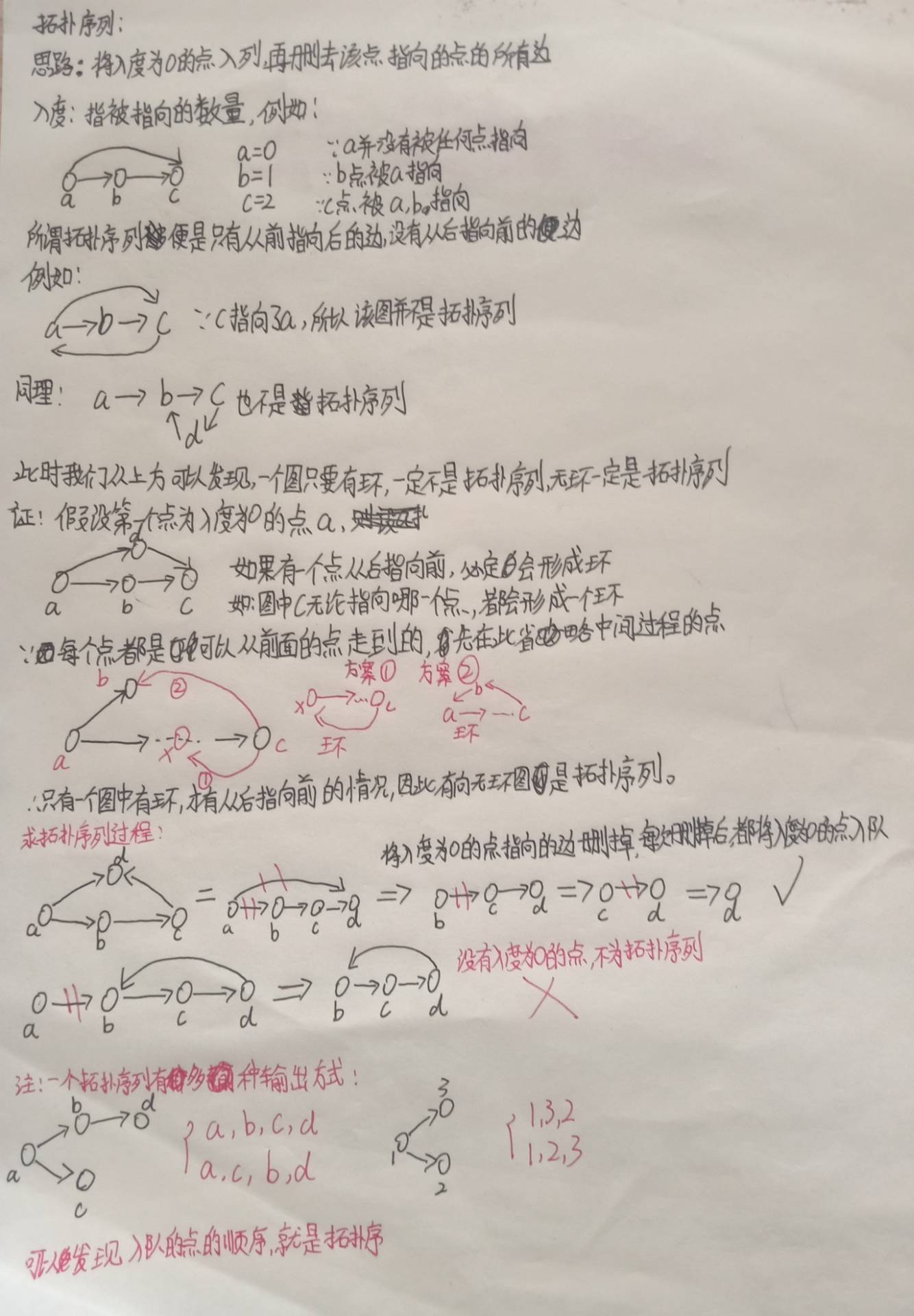
题解 - yxc
基于宽搜的拓扑排序
#include <iostream>
#include <cstring>
#include <algorithm>

using namespace std;

const int N = 100010, M = 100010;

int n, m;
struct Node
{
    int id;
    Node* next;
    Node(int _id): id(_id), next(NULL) {}
}*head[N];
int d[N], q[N];

void add(int a, int b)
{
    auto p = new Node(b);
    p->next = head[a];
    head[a] = p;
}

bool topsort()
{
    int hh = 0, tt = -1;
    for (int i = 1; i <= n; i ++ )
        if (!d[i])
            q[ ++ tt] = i;

    while (hh <= tt)
    {
        int t = q[hh ++ ];
        for (auto p = head[t]; p; p = p->next)
            if ( -- d[p->id] == 0)
                q[ ++ tt] = p->id;
    }

    return tt == n - 1;
}

int main()
{
    scanf("%d%d", &n, &m);
    while (m -- )
    {
        int a, b;
        scanf("%d%d", &a, &b);
        d[b] ++ ;
        add(a, b);
    }

    if (!topsort()) puts("-1");
    else
    {
        for (int i = 0; i < n; i ++ )
            printf("%d ", q[i]);
    }

    return 0;
}
基于深搜的拓扑排序
#include <iostream>
#include <cstring>
#include <algorithm>

using namespace std;

const int N = 100010, M = 100010;

int n, m;
struct Node
{
    int id;
    Node* next;
    Node(int _id): id(_id), next(NULL) {}
}*head[N];
int st[N], q[N], top;

void add(int a, int b)
{
    auto p = new Node(b);
    p->next = head[a];
    head[a] = p;
}

bool dfs(int u)
{
    st[u] = 1;

    for (auto p = head[u]; p; p = p->next)
    {
        int j = p->id;
        if (!st[j])
        {
            if (!dfs(j)) return false;
        }
        else if (st[j] == 1) return false;
    }

    q[top ++ ] = u;

    st[u] = 2;
    return true;
}

bool topsort()
{
    for (int i = 1; i <= n; i ++ )
        if (!st[i] && !dfs(i))
            return false;
    return true;
}

int main()
{
    scanf("%d%d", &n, &m);
    while (m -- )
    {
        int a, b;
        scanf("%d%d", &a, &b);
        add(a, b);
    }

    if (!topsort()) puts("-1");
    else
    {
        for (int i = n - 1; i >= 0; i -- )
            printf("%d ", q[i]);
    }

    return 0;
}